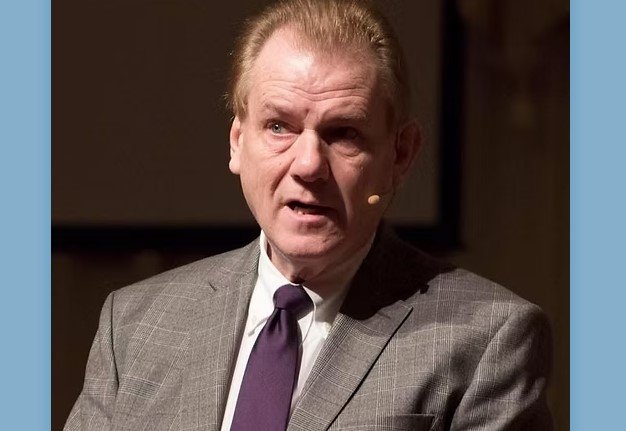
David Ring Preacher – Jonesboro, Arkansas native Evangelist David Ring has passed away on September 28, 2026. David Ring’s story is one of profound loss, personal struggle, and renewed hope. Ring faced challenges from an early age. Yet his life would become known not only for the obstacles he encountered, but also for the faith and determination with which he met them. His signature line captures the outlook he has shared with audiences for decades: “I have cerebral palsy, but cerebral palsy don’t have me.”
Childhood And Early Loss
Ring was born in Jonesboro, the seat of Craighead County in eastern Arkansas. His father, Oscar Newton Ring, was a Baptist pastor. When his father died in 1964, David was still a child. Four years later, cancer took his mother. At fourteen, Ring had lost both parents. The grief was especially painful because, as he later described it, he believed his mother was the only woman who would ever love him.
Alongside the difficulties associated with cerebral palsy, the loss left him deeply depressed. He dropped out of high school and, by his own account, attempted suicide many times during the following two years. These experiences form a central part of Ring’s story, but they do not define its whole. His life also reflects the importance of support, faith, and the possibility of finding a way forward after a period of despair.
A turning point and a return to school
With encouragement from his sister, Ring gave his life to Jesus in 1970. He returned to school at Liberty High School in Liberty, Missouri, and graduated in 1971. He went on to attend William Jewell College, also in Liberty, earning a Bachelor of Arts degree in 1976. During his college years, he was a member of the Lambda Chi Alpha fraternity.
Ring has spoken about his faith as a source of strength and purpose. His message is rooted in his own experience: a physical disability may shape a person’s life, but it does not have to determine the limits of that life or the meaning a person finds in it.
A message that became his calling card
Ring’s best-known statement is direct and personal: “I have cerebral palsy, but cerebral palsy don’t have me.” It expresses his conviction that his disability is part of his life, but not the measure of his identity. He is also known for challenging Christian audiences to think about how they live out their beliefs. Referring to his own determination to serve despite cerebral palsy, he has asked: “I have cerebral palsy, and I serve the Lord with all that is within me. What’s your excuse?”
The line is pointed, but its force comes from the life behind it. Ring speaks from experience with hardship, rather than from an assumption that life is easy. His message asks listeners to consider what they can do with the abilities, opportunities, and faith they have.
Speaking to audiences across the country
Ring has appeared on a range of Christian programs and at major faith gatherings. His appearances include *The Old-Time Gospel Hour*, *The 700 Club*, and Bill Gaither’s Praise Gathering. He has also been featured through John Hagee’s Cornerstone ministry and James Dobson’s Focus on the Family.
Through these platforms, Ring has shared his testimony with audiences far beyond his home state. His speaking combines personal history with a message of faith and perseverance, encouraging listeners to reconsider the excuses that can keep them from acting on their convictions.
His book and personal friendships
In 1994, Ring’s story was published in *Just As I Am: The Life of David Ring*. The book offers another way for readers to encounter the experiences behind his public message. Ring has also described gospel musician Mike Speck as his “best friend in the whole world,” a reminder that lasting friendship is an important part of a life often discussed in terms of public appearances and personal testimony.
A story of hardship and hope
David Ring’s life includes painful chapters: the death of both parents while he was young, a period of severe depression, and the challenges of living with cerebral palsy. It also includes a return to education, a college degree, a long career sharing his faith, and a message that has reached audiences through television, gatherings, and his writing.
His story should not be reduced to a slogan or treated as proof that disability and grief can simply be overcome through willpower. Rather, Ring’s own account shows how support, faith, education, friendship, and purpose can help someone move through profound hardship.
At the heart of his message is a distinction between having a disability and being defined by it. Ring has spent much of his life sharing that conviction—and urging others to make the most of the strength and opportunities available to them.